


 G7 To "Urgently" Implement Value Cap On Russian Oil Imports
[ad_1]
G7 To "Urgently" Implement Value Cap On Russian Oil Imports
[ad_1]
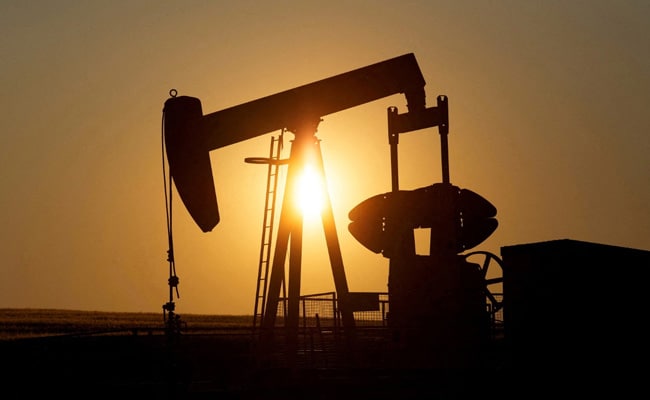
The preliminary cap could be set "at a stage based mostly on a spread of technical inputs". (Representational)
G7 industrialised powers vowed Friday to "urgently" transfer in the direction of implementing a worth cap on Russian oil imports in a bid to chop a serious supply of funding for Moscow's battle in Ukraine.
The G7 stated it was working in the direction of a "broad coalition" of help for the measure however officers in France urged warning, saying a "last" determination may solely be taken as soon as all 27 members of the European Union had given their assent.
Households on the continent have borne the brunt of rising power costs, with governments beneath stress to alleviate the ache of the ensuing excessive inflation.
"Russia is benefitting economically from the uncertainty on power markets brought on by the battle and is making large earnings from the export of oil and we need to counter that decisively," German Finance Minister Christian Lindner stated in a press convention after the transfer was introduced.
The intention of the worth cap on oil exports was to "cease an necessary supply of financing for the battle of aggression and comprise the rise in world power costs", he added.
Forward of Friday's determination, Kremlin spokesman Dmitry Peskov sounded a transparent warning.
The adoption of a worth cap "will result in a big destabilisation of the oil markets," he stated.
Moscow would "merely not provide oil and petroleum merchandise to corporations or states that impose restrictions," Russia's Deputy Prime Minister Alexander Novak had warned on Thursday, in keeping with Russian information businesses.
"Interference out there mechanisms of such an necessary trade ... will solely destabilise the oil trade, the oil market. And for this, European and American customers would be the first to pay," he stated.
'Highly effective software'
At a summit in June, the G7 leaders agreed to work in the direction of implementing the ceiling on crude gross sales.
Of their assertion, finance ministers from the G7 stated they'd "urgently work on the finalisation and implementation" of the long-considered measure, with out specifying the cap stage.
The worth cap was "one of the highly effective instruments we now have to struggle inflation and shield employees and companies in the US", US Secretary of the Treasury Janet Yellen stated in a press release Friday.
Nonetheless, the French finance ministry stated technical work on the worth cap was nonetheless "in progress".
"It's clear that no last determination will be taken till we now have consulted and obtained unanimous help from all 27 member states of the European Union," it stated.
"We help all measures that cut back the revenue that Russia derives from the sale of oil," French Finance Minister Bruno Le Maire added.
EU Commissioner Paolo Gentiloni stated the bloc goals to discover a deal by December 5 for crude oil and February 5 for petroleum merchandise.
'Broad coalition'
The G7 additionally voiced ambition to increase the measure past the bloc, saying it was searching for to type a "broad coalition" of help for the oil worth cap to "maximise" the effectiveness of the measure.
The ministers urged "all nations that also search to import Russian oil and petroleum merchandise to decide to doing so solely at costs at or beneath the worth cap".
The push to get as many nations as doable to go together with the cap is anticipated to be a key subject for dialogue by leaders on the G20 summit in Bali on November 15 and 16.
The preliminary cap could be set "at a stage based mostly on a spread of technical inputs" the G7 ministers stated, including that its effectiveness could be "intently monitored".
Analysts warned, nonetheless, that the cap could but gasoline one other rise in costs.
The cap would introduce new dangers for the oil market by "probably disrupting Russian power provides", Capital Economics analyst Liam Perch stated in June. "This might push world power costs up additional."
"The cap may be efficient at lowering the Russian authorities's tax revenues," he stated, speculating that a cap just under $80 (80 euros) per barrel may "push Russia's finances right into a deficit".
(Apart from the headline, this story has not been edited by NDTV employees and is revealed from a syndicated feed.)
[ad_2]
0 comments